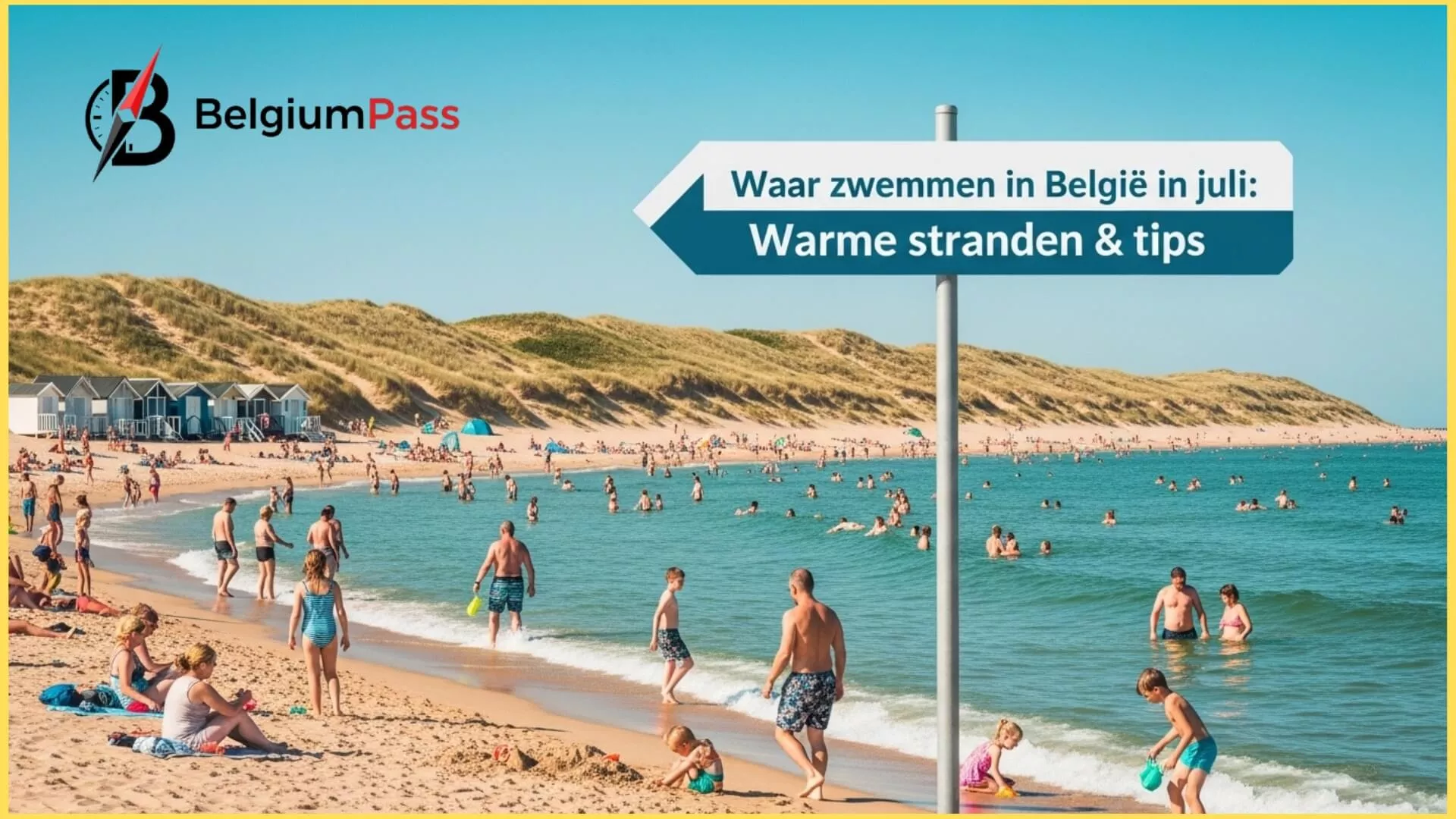
Where to Swim in Belgium in July: Warm Beaches & Tips
So you’re in Belgium in July and want to go swimming? Good news: July is literally the only month when Belgian waters reach their peak temperatures, and honestly, you should take advantage. Whether you’re hitting the North Sea coast, exploring inland lakes, or finding a charming outdoor pool, Belgium offers more swimming options than you might expect for a small country.
Let me be real with you – Belgium isn’t Greece or Spain. The water isn’t Mediterranean bathtub-warm. But July is when everything comes together: decent sea temps, warm sunny days, and that perfect summer vibe. Here’s everything you need to know about where to swim in Belgium this July.
Is the North Sea Actually Warm Enough in July?
Let’s tackle the big question: Belgian North Sea water in July averages around 63°F (17°C), ranging from 60-65°F. By international standards, that’s classified as “cold swimming”. The North Sea generally reaches its warmest temps (16-19°C / 61-66°F) around mid-August, peaking around August 17th.
But here’s the thing – by Belgian standards, this is swimming season! Locals absolutely go in the water at these temps. Air temperatures in July average around 67-72°F (19-22°C), so the water doesn’t feel shockingly cold when it’s a warm sunny day.
Best times to swim: Early afternoon (1-3 PM) when the water has warmed slightly from morning sun. Also, on hot days when air temperatures exceed 77°F (25°C), the 63°F water actually feels refreshing rather than cold.
Is it comfortable for extended swimming? Honestly, it depends on your tolerance. Kids and hardy souls have no problem. If you’re used to warm Mediterranean waters, you might find it brisk. But it’s totally swimmable, and thousands of people do it every July.
Best Belgian Beaches for Swimming in July
Ostend Beach
The queen of Belgian beaches. Ostend is the biggest seaside resort with a long sandy beach, excellent facilities, and proper lifeguard coverage. Water temp averages 63°F (17°C) in July.
What makes Ostend great: designated swimming zones clearly marked and monitored, beach volleyball courts, showers and changing rooms, tons of beach bars and restaurants, and a lively summer atmosphere. It’s Belgium’s most popular beach, so expect crowds on hot July weekends.
The beach stretches for kilometers, so even when busy, you can find space. Lifeguards patrol the main sections, and there’s a proper promenade for evening walks.
Knokke-Heist
Belgium’s poshest beach resort. Knokke-Heist has 12 kilometers of wide, well-maintained beaches averaging 70 meters in width. The water is the same 63°F (17°C) as the rest of the coast, but Knokke often feels calmer and less choppy than other beaches.
The most popular stretches are Albertstrand and Het Zoute, though even in July and August, there’s plenty of space. What sets Knokke apart is the overall vibe – chic beach bars, upscale restaurants, art galleries, and a more relaxed, refined atmosphere.
Great for couples and families who want a bit more style with their beach time. The beaches are impeccably clean, and the facilities are top-notch.
Blankenberge
The family-friendly favorite. Blankenberge has sheltered swimming areas that make it ideal for kids and beginners. The beach has organized sections with beach clubs, showers, and good lifeguard coverage.
Water temps match the coast average at 63°F. What makes Blankenberge work for families is the infrastructure – easy beach access, plenty of parking, shops, and ice cream stands right on the seafront, and that classic Belgian seaside resort charm.
Gets busy on summer weekends, but the vibe is fun and welcoming rather than overcrowded chaos.
De Panne
The nature lover’s beach. De Panne features wide beaches backed by natural dunes, giving it a more wild, unspoiled feel than the developed resorts. It’s less crowded than Ostend or Blankenberge, perfect if you want more space.
Water temp is 63°F (17°C), ranging from 61-65°F. Because De Panne is at the western end of the Belgian coast near the French border, it can be slightly windier. Check wind forecasts – strong onshore winds create waves that aren’t ideal for relaxed swimming but are fun for playing in the surf.
The natural dune landscape is beautiful for walking, and there’s a more laid-back, less commercial atmosphere.
Inland Swimming: Lakes & Outdoor Pools
Lakes of Eau d’Heure
This is Belgium’s best-kept swimming secret. The Lacs de l’Eau d’Heure are Belgium’s largest lake complex, covering 1,800 hectares. Swimming is only permitted in two lakes: Lac de la Plate Taille and Lac de Falemprise.
Espace Fun beach at Lac de la Plate Taille is the main swimming area, featuring supervised swimming zones with lifeguards (weather-dependent), a sandy beach, a beach volleyball court, and clear water quality monitoring. The water is warm freshwater – significantly warmer than the North Sea in July, making this ideal for longer swims.
Summer Lake by Falemprise is closed until 2027 for renovations, so stick to Plate Taille for now.
Why lakes beat the sea: Warmer water, no salt, no waves, and freshwater feels gentler on skin. The Eau d’Heure lakes offer excellent water quality (you can check current quality ratings online ), beautiful natural surroundings, and activities beyond swimming, like kayaking, sailing, and hiking around the 70 km of shoreline.
The lakes are in Wallonia, about 90 minutes south of Brussels – perfect for a day trip or weekend escape.
Provincial Recreation Domains
Belgium has several provincial recreation areas with designated swimming lakes, especially in Flanders. These feature monitored water quality, entry fees (usually modest), facilities like changing rooms and picnic areas, and lifeguard supervision during peak season.
Water quality is regularly tested and published. Look for sites with current “Good” water quality ratings before visiting.
Outdoor Pools in July
Brussels doesn’t have many permanent outdoor pools, but there are options. Until 2024, FLOW was the city’s best outdoor pool option along the canal in Anderlecht, but it permanently closed in May 2025.
Nausicaa Pool in Waterloo (10 km south of Brussels) has a retractable roof that opens on sunny summer days, transforming it into an open-air pool. Features include a spacious outdoor area, a fun slide, and affordable entry fees.
Boekenberg eco swimming pool in Antwerp is Belgium’s first ecological pool, converted in 2007. It’s an open-air pool in Boekenberg Park with 22,000 aquatic plants that naturally purify the water instead of chlorine. It’s free to use but gets crowded on hot days. This is perfect for a July heatwave swim.
Many indoor pools have outdoor solariums where you can sunbathe after swimming.
Safety Tips for Swimming in Belgium
Beach Flag System
Belgian beaches use a standard color-coded flag system:
Green flag: Safe to swim, calm conditions
Yellow flag: Swimming allowed but dangerous conditions; no inflatables, rubber boats, or floaties allowed in the water
Red flag: Swimming strictly forbidden
Surfers have their own green (allowed) and red (forbidden) flags with a surfboard logo.
Critical rule: Never swim in unguarded areas. These are marked with prohibition signs. Swimming near breakwaters and moles is extremely dangerous due to strong currents and whirlpools.
Currents and Tides
The North Sea has tidal currents and can develop dangerous conditions quickly. Always swim in designated lifeguard zones and follow instructions. If caught in a current, don’t fight it – swim parallel to shore until free, then swim back to the beach.
Lake Safety
At the Eau d’Heure lakes, flags indicate swimming permission:
Respect the buoy lines marking safe swimming zones.
Wild Swimming Rules
Important: Swimming in rivers is forbidden in Flanders unless explicitly allowed. In Wallonia, swimming is allowed by default, but exceptions exist where it’s considered too dangerous.
Some lakes, such as Lac de Nisramont, Lac de la Gileppe, and Lac d’Eup alson have total swimming bans. Always check local regulations before wild swimming.
Practical Tips for Better Swimming
Best Times to Avoid Crowds
Weekday mornings (Tuesday-Thursday, 9-11 AM) are the quietest at both beaches and lakes. July weekends see Belgian families on beach trips, so expect full beaches Saturday-Sunday. Early morning and late afternoon (after 5 PM) are less crowded.
Wetsuit: Yes or No?
For kids or anyone who gets cold easily, a shorty wetsuit (short arms/legs) or wetsuit top makes North Sea swimming way more comfortable at 63°F (17°C). You’ll see plenty of locals wearing them.
For lakes, wetsuits are unnecessary – the freshwater is warmer and more comfortable.
What to Pack
- Windbreak or beach tent: The Belgian coast can be breezy even on warm days
- Warm towel and change of clothes: That 63°F water means you’ll want to warm up after
- Reef shoes (optional): Some beach areas have pebbles or shells
- Sunscreen: Belgian sun in July is stronger than you think
- Snacks and drinks: Beach kiosks can be pricey
Checking Water Quality
For lakes, check official water quality reports online before visiting. The Eau d’Heure lakes publish their current quality status. Beach water quality is monitored regularly along the coast.
Swimming with Kids in Belgium
Safest Options
Best beaches: Blankenberge (sheltered areas, gentle slopes), Knokke-Heist (wide beaches, calm water), and organized sections of Ostend with clear lifeguard zones.
Best lakes: Lac de la Plate Taille at Eau d’Heure – warm freshwater, designated shallow areas, lifeguard supervision.
Shallow Swimming Areas
Belgian beaches generally have gradual slopes into the water, making them kid-friendly. Look for designated family zones with lifeguards.
Lifeguard Schedules
July is peak season, so lifeguards are present daily at major beaches during daylight hours (typically 10 AM-6 PM, but verify locally). At lakes, lifeguard coverage depends on weather and may be intermittent – check before relying on it.
FAQs
Can you swim comfortably in Belgium in July?
Yes, with the right expectations. North Sea water averages 63°F (17°C) – refreshing rather than warm. Locals swim happily at these temps. If you’re used to Mediterranean warmth, it might feel brisk initially, but you acclimatize quickly. Inland lakes are warmer and more comfortable for extended swimming.
Are Belgian beaches clean for swimming?
Yes. Belgian coastal beaches maintain good water quality standards and are regularly monitored. Many have Blue Flag certification, meeting international cleanliness and safety standards. The Eau d’Heure lakes also maintain excellent water quality with regular testing.
Is wild swimming allowed in Belgium?
Complicated. In Flanders, river swimming is forbidden unless explicitly allowed. In Wallonia, swimming is allowed by default, but specific dangerous locations are prohibited. Some major lakes like Nisramont, Gileppe, and Eupen ban swimming entirely. Always check local regulations and only swim in designated, supervised areas.
Best Places to Swim in Belgium in July
For a classic Belgian beach experience, hit Ostend or Knokke-Heist – both offer excellent facilities, lifeguards, and that seaside resort atmosphere. If you want warmer water without the salt, Lac de la Plate Taille at Eau d’Heure is unbeatable for freshwater swimming in beautiful natural surroundings.
Families should choose Blankenberge for beaches or the Eau d’Heure lakes for the warmest, calmest conditions. Budget-conscious swimmers can try the free eco pool at Boekenberg in Antwerp.
Between sea, lake, or pool? If it’s a hot July day (above 77°F/25°C air temp), the cooler North Sea feels amazing. If it’s mild or you want longer swimming sessions, choose warmer lake water. Pools are perfect for guaranteed comfort and facilities.
July is Belgium’s swimming month – make the most of it. Pack that windbreak, embrace the “refreshing” North Sea temps, and enjoy Belgium’s summer at its best. You might not get Mediterranean warmth, but you’ll get that unique Belgian coastal charm that locals have loved for generations.