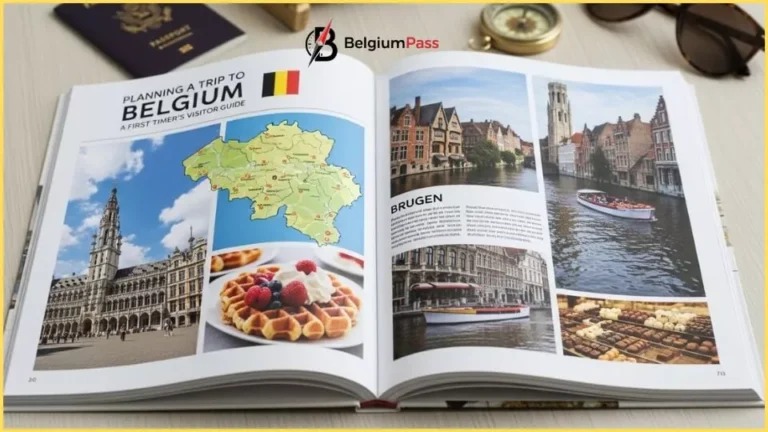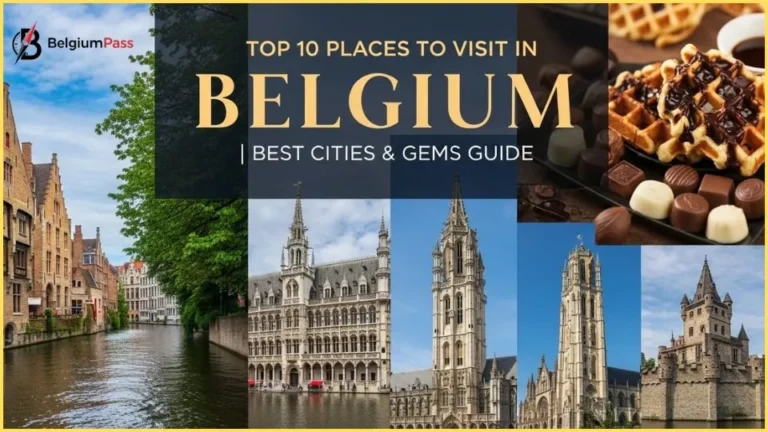
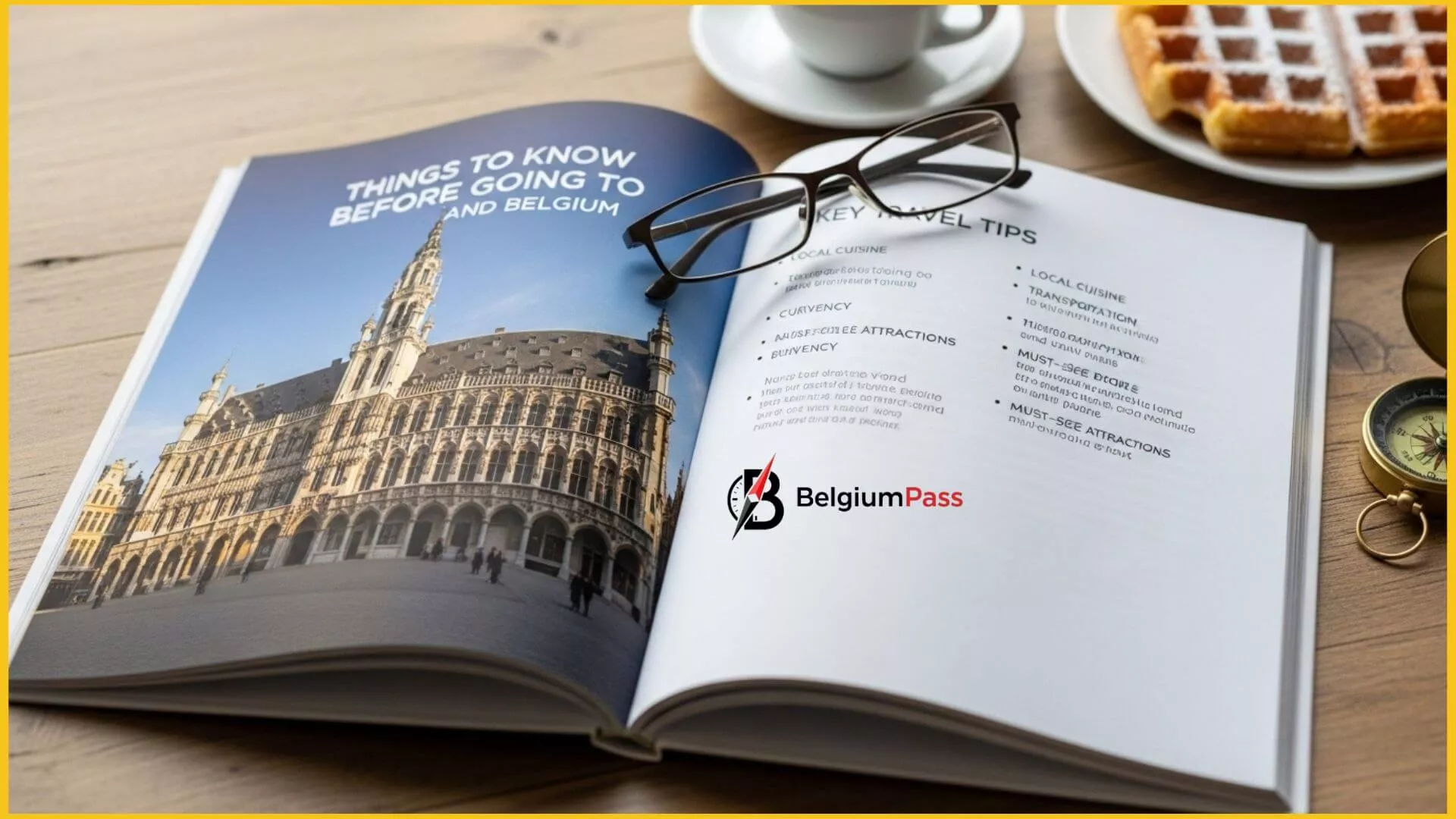
Things to Know Before Going to Brussels and Belgium
Real talk: Belgium is one of the most underrated countries in Europe, and people keep skipping it for Paris or Amsterdam. Big mistake. It’s got medieval cities that look fake, they’re so pretty, food that’ll ruin everything you eat back home, beer culture that’s basically a religion, and it’s small enough to do multiple cities in one trip without it feeling like a marathon. Here’s everything you need to know before you land.
Quick facts (the basics)
Capital: Brussels (also where the EU runs things, hence all the suited people looking important)
Languages: Dutch in the north, French in the south, German in a tiny eastern pocket. Brussels is officially both French and Dutch — and somehow it works.
Currency: Euro (€)
Size: Tiny. Like, smaller than a lot of US states. You can cross the whole country in under 2 hours by train.
Fun fact: Belgium invented waffles, frites (not France — locals will correct you cheerfully), and has 1,500+ beer varieties. It’s basically a culinary superpower that nobody talks about enough.
Best time to go
| Season | Vibe | Worth it? |
|---|---|---|
| Spring (Mar–May) | Mild, flowers, manageable crowds | Best timing overall |
| Summer (Jun–Aug) | Long days, festivals, full energy | Yes, but busier and pricier |
| Autumn (Sep–Nov) | Cozy, quieter, beautiful colours | Underrated and excellent |
| Winter (Dec–Feb) | Christmas markets, festive lights | Absolutely yes |
Rain reality check: Belgium can rain any time of year — this is just the truth and you need to accept it. Always pack a compact umbrella or light waterproof jacket, even in July. May–June and September are your safest weather bets.
Must-know tips before you go
Language stuff
Most tourism staff speak English perfectly well, so you won’t be stranded. But knowing a few words goes a long way — people genuinely appreciate the effort:
French: Merci (thank you), Bonjour (hello), S’il vous plaît (please)
Dutch: Dank u (thank you), Goeiedag (hello)
In Brussels specifically, defaulting to French usually works fine. On the Flemish side (Bruges, Ghent, Antwerp), Dutch is more common. When in doubt, English bridges everything.
Getting around Brussels
Metro/trams/buses: Solid network. Get a MOBIB rechargeable card or multi-journey ticket — single tickets cost more and add up fast.
Walking: The centre is very walkable. Grand Place to Atomium requires a metro ride, though.
Trains to other cities: This is the key to Belgium. SNCB/NMBS trains from Brussels-Midi, Central, or Nord. Brussels → Bruges is about 53 minutes, → Ghent about 30 minutes, → Antwerp about 45 minutes. Day trips couldn’t be easier.
Safety
Brussels is generally safe. Standard city common sense applies:
Watch your bag and phone at crowded spots (Grand Place, busy metro stations).
Don’t flash expensive stuff unnecessarily.
Emergency number: 112 — works everywhere in Europe.
What to pack (the real list)
Comfortable walking shoes — cobblestones are everywhere. They’re beautiful and they will destroy you if you wear the wrong shoes.
Light waterproof jacket or compact umbrella — always, no exceptions.
Layers — weather can flip quickly, especially spring and autumn.
European Type E plug adapter — Belgium uses standard European 230V sockets.
Some cash (€) — cards work almost everywhere, but small friteries and markets sometimes prefer cash.
Passport + travel insurance details — obvious but worth saying.
The food situation (pay attention to this section)
Belgian food culture is seriously underrated on the world stage and that is a crime. Here’s what you must eat:
Belgian waffles — two completely different styles: Brussels waffles (light, crispy, rectangular) and Liège waffles (dense, chewy, caramelised sugar baked in). Eat both. Do not choose.
Frites — thick-cut, double-fried, paper cone, mayonnaise sauce. Find a proper frituur, not a tourist-facing fast food chain. This is important. The difference is massive.
Moules-frites — mussels + fries in a giant pot. Classic Brussels brasserie meal. Excellent.
Belgian chocolate — buy from an actual chocolatier. Fresh pralines have a short shelf life because they’re real food, not candy. Neuhaus, Leonidas, Pierre Marcolini are all excellent. Airport chocolate boxes are not the same thing.
Belgian beer — 1,500+ varieties. Trappist ales brewed by actual monks, sour lambic beers, rich abbey ales. Sit in a proper estaminet (traditional beer café) and take your time. Call it research.
Speculoos — that spiced biscuit you know as Lotus Biscoff. Belgium invented it. You’ve been accidentally eating Belgian food your whole life.
Dining tip: Lunch menus at sit-down restaurants are usually great value — same quality food as dinner, lower price. Also: don’t eat directly on Grand Place. The view is stunning, the prices are not.
Tipping: Not obligatory like in the US. Rounding up or leaving 5–10% at sit-down restaurants is appreciated. Nobody expects it, everyone appreciates it.
Top things to see in Brussels
Grand Place — UNESCO World Heritage Site and one of the most beautiful squares in Europe. Go at night when it’s lit up and just… stand there for a minute.
Atomium — a giant 1958 World’s Fair structure that looks like an atom molecule designed by a sci-fi enthusiast. Weird, iconic, very Brussels. Book ahead in peak season.
Manneken Pis — the famous tiny bronze statue of a peeing boy. It’s smaller than you expect. Still funny. Very emblematic of Belgian humour.
Magritte Museum — René Magritte (“this is not a pipe” guy). Great museum, well done.
Belgian Comic Strip Center — comics are serious culture here. Tintin, the Smurfs (yes, Belgian), Lucky Luke, all celebrated properly.
Royal Gallery of Saint Hubert — world’s oldest covered shopping arcade. Lined with chocolate shops. Dangerous.
Comic Book Route — giant murals of comic characters on building walls around the city. Fun to spot them on a walking tour.
Day trips that are worth doing
All of these are easy train rides from Brussels — no car needed:
Bruges (~53 min): Medieval canals, cobblestone streets, Belfry Tower, chocolate shops. Looks completely fake but it’s real. Day trip or overnight, both work.
Ghent (~30 min): Less touristy than Bruges, better nightlife, Gravensteen Castle, great food scene. A lot of people end up preferring it to Bruges.
Antwerp (~45 min): Fashion district, diamond quarter, Central Station that looks like a cathedral, MAS Museum. Cool city energy.
Waterloo (~20 min from Brussels): Where Napoleon lost everything in 1815. Lion’s Mound viewpoint and decent museum. Worth a half-day if history interests you.
Getting around Belgium
Trains are your best friend. SNCB/NMBS connects everything reliably and affordably. Their 10-journey card covers 10 single trips between Belgian stations, valid for a year — good value if you’re moving around a lot.
Car: Don’t bother for city-hopping. Only really useful for the Ardennes countryside and rural exploring.
Cycling: Bruges, Ghent, and Leuven are very bike-friendly. Renting for a few hours is genuinely fun and very local.
International trains: Brussels connects to Paris (~1h22 by Thalys), Amsterdam (~2h), London (~2h via Eurostar from Brussels-Midi), and Cologne (~2h). Belgium is a brilliant base for wider European travel — it basically sits in the middle of everything.
What things cost (rough 2026 guide)
| Budget type | Daily cost per person |
|---|---|
| Budget | €70–€100/day |
| Mid-range | €130–€200/day |
| Luxury | €300+/day |
Money-saving moves:
Brussels Card covers unlimited public transport + museum entries — worth it for 2–3 day stays.
Eat your main meal at lunch (better value at almost every restaurant).
Many museums offer free entry one afternoon per month — check ahead.
Don’t buy waffles and chocolate from the touristy Grand Place kiosks — walk one street away and pay half the price.
Cultural stuff worth knowing
Greetings: Handshake for formal stuff. Friends do a cheek kiss (once or twice depending on region — just follow the local lead and don’t overthink it).
Queuing: Belgians queue politely. Don’t push in.
Photography in churches: Usually fine outside; check signs inside. Some museums restrict flash or tripods.
Punctuality: Belgians are reasonably time-conscious. For restaurants, 10–15 minutes late is fine; for anything more formal, be on time.
Emergency info (quick + important)
Emergency (police/fire/ambulance): 112 — universal across Europe
Police non-emergency: 101
Pharmacies: Green cross sign. Night pharmacies rotate — there’s always one open nearby.
Tap water: Safe to drink everywhere in Belgium. Stop buying bottled water and save money.
Travel insurance: Get it. EU citizens have an EHIC for health coverage; everyone else needs proper travel insurance.
Apps to download before you go
SNCB app — train tickets and real-time schedules
Citymapper — best for Brussels public transport
Google Maps offline — download the Belgium map before you go, works without data
DeepL — better than Google Translate for French/Dutch menus and signs
Belgium doesn’t shout about how good it is, which is honestly part of the charm. It just quietly has incredible medieval cities, world-class beer and chocolate, easy train connections, and warm locals who appreciate when you make the effort to visit properly. Go, eat everything, take the train to at least two other cities, and give yourself more time than you initially plan. You’ll want it.