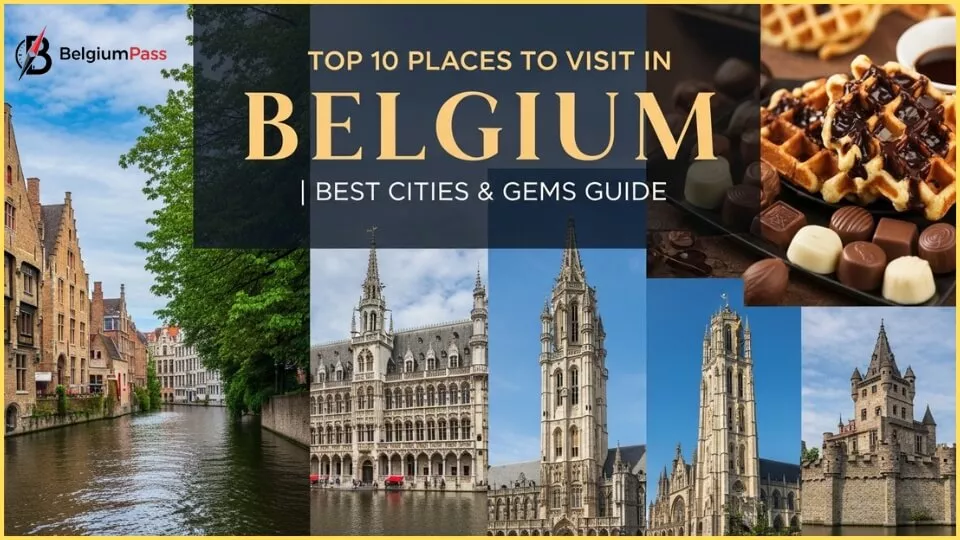
Top 10 places to visit in Belgium | Best Cities & Gems Guide
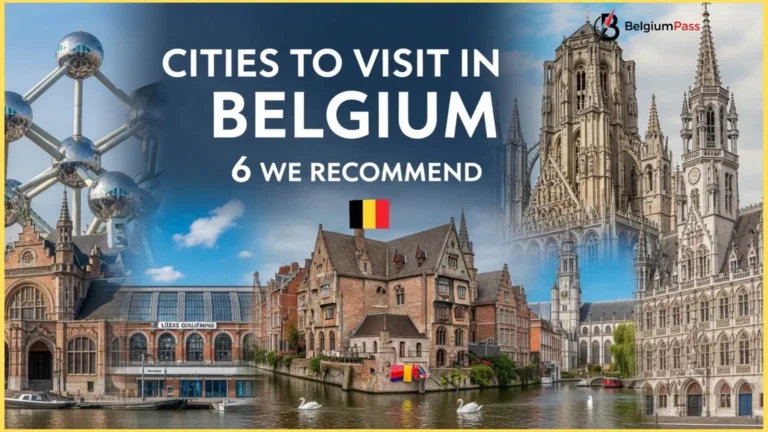
Let’s clear something up: Belgium is not just a country you pass through on the way to somewhere else. It’s one of Europe’s most underrated destinations, and people who skip it are genuinely missing out. Medieval cities that look like fairy tales, chocolate that changes your life, beer that has its own UNESCO heritage status, and enough history to fill a library — all crammed into a country roughly the size of Wales. Oh, and everything is close together so that you can pack a huge amount into just a week. Here are the 10 places you need to visit.
1. Brussels – More Than Just Politics
Look, when people hear “Brussels,” they think EU buildings and men in suits. Fair enough. But Brussels is actually one of the most vibrant, diverse, and genuinely fun cities in Europe. Great food, brilliant architecture, chaotic energy, and a sense of humor that shows up in everything from its famous comic book murals to a tiny peeing statue that the entire country treats as a national icon.
Don’t miss:
Grand Place — One of the most beautiful squares on the planet. Go at night when it’s lit up and try not to audibly gasp
Atomium — A giant atom model built for a 1958 World’s Fair that somehow still looks like something from the future
Manneken Pis — A tiny bronze statue of a boy doing exactly what you think. It’s smaller than you expect, funnier than it should be, and somehow beloved by everyone.
Royal Palace — Open to visitors in summer and genuinely worth a look
Quick tip: Stay in Saint-Gilles or Ixelles for a more local feel. Walk everywhere — the city rewards wandering.
2. Bruges
Bruges is on every Belgium listicle ever written, and honestly? It deserves to be. The whole historic center is UNESCO-listed, the canals are ridiculously pretty, and the medieval streets feel like they haven’t changed in 600 years. It gets crowded in summer — yes — but even then it’s magical. Just go on a weekday morning, and you’ll have it almost to yourself.
Don’t miss:
Belfry of Bruges — Climb 366 steps. Your legs will complain. The view will make it worth it
Market Square (Markt) — The classic postcard shot. Grab a coffee and stare at it for a while
Basilica of the Holy Blood — Tiny church, massive claim (it allegedly holds a relic of Christ’s blood). Religious or not, it’s fascinating
Pro tip: Rent a bike. It’s the most Bruges way to see Bruges.
3. Ghent
Ghent is what happens when you take the beauty of Bruges and add a big university, a thriving food scene, and a city that actually feels alive. It’s less polished and more authentic — locals genuinely prefer it to Bruges — and the medieval skyline is honestly just as impressive. If you skip Ghent, you’re making a mistake.
Don’t miss:
Gravensteen Castle — A proper medieval fortress with a moat, right in the middle of the city. The museum inside has medieval torture devices with surprisingly funny commentary.
St. Bavo’s Cathedral — Home to the Ghent Altarpiece by Jan van Eyck, widely considered one of the greatest paintings ever made. Genuinely a wow moment
Graslei & Korenlei — The riverside waterfront lined with guild houses. Best at golden hour with a local beer in hand
4. Antwerp
Antwerp is the city that quietly becomes everyone’s favorite. Fashion capital, diamond capital, art city, port city — it somehow does all of it without feeling overwhelming. Around 84% of the world’s rough diamonds pass through the Diamond District here, and the fashion scene has been internationally influential since the legendary Antwerp Six designers came out of the local fashion school in the 1980s. It’s also home to a train station that people visit just to look at.
Don’t miss:
Cathedral of Our Lady — Gothic beauty with four original Rubens paintings inside
Antwerp Central Station — Built in 1905 with a massive dome, 20 types of stone, and an iron-and-glass hall that’ll make your jaw drop. Regularly voted one of the most beautiful stations in the world
MAS Museum rooftop — Free panoramic views over the city. Always worth the trip
5. Dinant
Most people have never heard of Dinant. That’s a shame, because it’s one of the most visually striking towns in Belgium. It sits squeezed between the River Meuse and towering limestone cliffs, with a striped-dome church and a clifftop citadel that look almost too dramatic to be real. It was also the birthplace of Adolphe Sax — yes, the guy who invented the saxophone — and the town leans into that legacy hard, with saxophone sculptures dotted across the famous bridge and a little museum dedicated to his life. It’s a brilliant day trip.
Don’t miss:
Citadel of Dinant — Take the cable car up for views that’ll genuinely stop you in your tracks
Collegiate Church of Notre Dame — That beautiful church wedged between the cliff and the river
Adolphe Sax House — Small, free, and surprisingly charming
6. Leuven
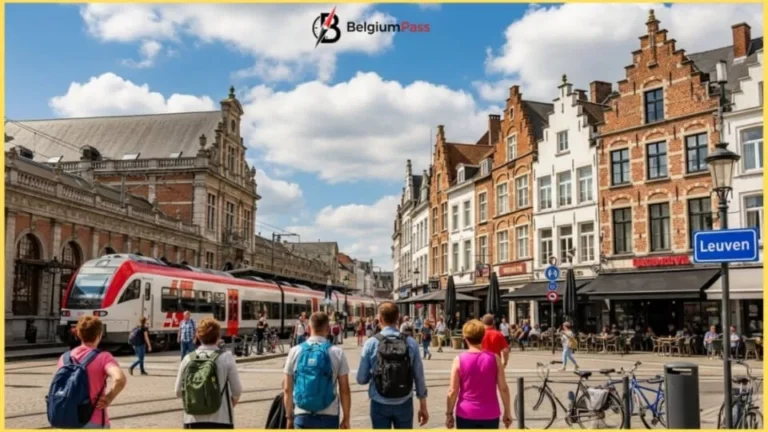
Leuven is one of those cities that rewards travelers who go slightly off the beaten path. It’s home to KU Leuven, one of the oldest universities in Europe (foundedin 1425, no big deal), which gives the whole city a young, lively energy. The Gothic Town Hall is one of the most ornate in Belgium — covered in hundreds of stone statues that make it look almost impossibly detailed. And then there’s the Oude Markt: a square so completely lined with cafés and bars on every side that it’s officially nicknamed “the longest bar in the world.” Yes, that’s a real claim. Yes, it’s as fun as it sounds.
Don’t miss:
Leuven Town Hall — Extravagant Gothic architecture that looks like someone just kept adding decorations, and nobody stopped them
Oude Markt — Grab a Belgian beer, sit outside, and enjoy the atmosphere. This is what evenings are for
7. Durbuy
Durbuy (say it Dur-bwee, trust me) claims to be the smallest city in the world — which is technically a stretch, but the spirit of it is real. The medieval old town is tiny, stone-paved, and completely charming. It’s surrounded by the rolling green hills of the Ardennes, and there’s kayaking, hiking, and cycling all around. It also has the world’s largest topiary garden, which is a completely random claim to fame but somehow makes it more lovable. Perfect for a slow afternoon or a weekend escape into the countryside.
8. Mechelen
Most visitors on the train between Brussels and Antwerp just look out the window at Mechelen and keep going. Stop. Get off. It was actually the capital of the Habsburg Netherlands in the 16th century and has the history to match — gorgeous old town, barely any tourists, and prices that haven’t been inflated for foreign visitors yet.
Don’t miss:
St. Rumbold’s Cathedral — Construction started in the 13th century and took over 300 years to finish (relatable, honestly). The tower is UNESCO-listed, and inside there’s a stunning Van Dyck painting
Just wandering — the old town is compact, beautiful, and wonderfully uncrowded
9. Ostend
Yes, Belgium has beaches. They’re along the North Sea, they’re not the Caribbean, and they’re genuinely lovely. Ostend is the main coastal town, with over 8 kilometers of sandy beach, a seafront promenade, and excellent fresh seafood. On a sunny summer day, it’s brilliant. In the off-season, it has this moody, windswept charm that’s actually really atmospheric. Either way, the North Sea shrimp are fresh, the fish is great, and the vibe is wonderfully relaxed compared to the rest of the country.
Don’t miss:
Ostend Beach — Straightforward but great
Royal Galleries — Elegant 19th-century covered promenade right along the seafront
Fresh grey shrimp — A local specialty, served in croquettes or just plain. Eat as many as possible.
10. Ypres
This last one is different from everything else on the list. Ypres (or Ieper in Dutch) is a small Flemish town that was almost completely flattened during World War I and painstakingly rebuilt afterwards. Today, it’s one of the most moving WWI memorial sites in the world. It’s not easy to visit emotionally — but it’s one of those travel experiences that genuinely changes your perspective.
Don’t miss:
Menin Gate — A massive memorial arch engraved with the names of 54,896 soldiers with no known grave. Every single night at 8 pm, buglers play the Last Post under its arches — a ceremony that has run almost every night since 1928. Standing there when it happens is one of the most powerful things you can experience in Europe
In Flanders Fields Museum — One of the best war museums in the world. Immersive, thoughtful, and genuinely brilliant
Bonus:
Han-sur-Lesse Caves — Spectacular natural cave system in the Ardennes, great for all ages
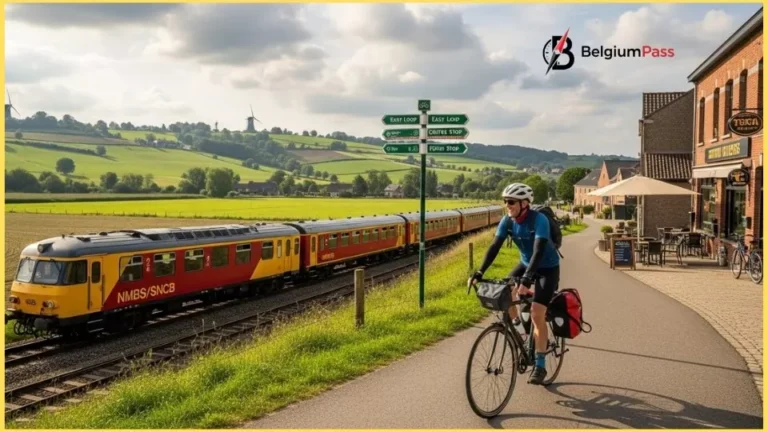
Belgian Ardennes road trip — Forested hills, charming villages, and zero crowds. Underrated
Chocolate workshops (Brussels or Bruges) — Make your own pralines under the guidance of a real Belgian chocolatier. Yes, you get to eat them.
Beer tours — Over 1,500 Belgian beers exist. Getting a guided introduction is genuinely one of the best ways to spend an afternoon.
Your 7-Day Belgium Itinerary
| Day | Destination | Main Vibe |
|---|---|---|
| Days 1–2 | Brussels | Architecture, waffles, beer, comic murals |
| Day 3 | Ghent | Altarpiece, castle, riverside drinks |
| Day 4 | Bruges | Canals, Belfry, medieval everything |
| Day 5 | Antwerp | Train station, diamonds, fashion, art |
| Day 6 | Dinant or Durbuy | Dramatic cliffs or cozy Ardennes charm |
| Day 7 | Ypres or Ostend | Last Post ceremony or North Sea seafood |
Belgium is one of those countries that constantly surprises people. You show up expecting a short stopover, and you leave with a list of reasons to come back. It’s compact, it’s easy to get around, and it delivers the kind of experiences — a sunset over Ghent’s waterfront, the sound of bugles echoing under the Menin Gate, the first bite of a proper Belgian praline — that genuinely stick with you.