7 Famous Belgian Foods: Belgian Cuisine Travel Guide
If you like comfort food, sweet treats, and the kind of meals that make you want a nap afterwards, Belgium is going to make you very, very happy. From waffles and fries to beer, chocolate, and slow-cooked stews, this tiny country is packed with dishes that feel both familiar and special.
You’ll run into great food pretty much everywhere: street stalls, cozy cafés, brasseries, and old-school bars in cities like Brussels, Bruges, Antwerp, and Ghent. Think of this guide as your “eat this, don’t skip that” list for your trip.
Why Belgian Cuisine Is So Loved
Belgian food is all about seasonal, local ingredients and regional traditions that people actually care about—this isn’t just marketing. You’ll see a lot of potatoes, leeks, grey shrimp, Belgian endive, local beer, meat, cheese, and plenty of butter sneaking into classic recipes.
People often say Belgian food sits somewhere between French finesse and Flemish heartiness, with a bit of Dutch and German influence mixed in. The result is a cuisine that feels both cozy and a little bit elegant, without being pretentious.
1. Belgian Waffles – Your New Favorite Street Snack
You really can’t go to Belgium and not eat waffles. They’re everywhere: cafés, tea rooms, street stalls, markets—you name it. They’re cheap, warm, and easy to eat while wandering around a pretty square, which is why travelers love them so much.
Types of Belgian Waffles
There are two main waffle stars you’ll hear about: Brussels waffles and Liège waffles.
Brussels waffles: Light, rectangular, with deep pockets that hold toppings like a dream.
Liège waffles: Denser, sweeter, more caramelized, and honestly feel more like a dessert you tell yourself is “just a snack.”
Toppings You Should Try
Best part? The toppings. You’ll see:
Melted chocolate
Fresh fruit
Whipped cream
Powdered sugar
Seasonal fruit, depending on the time of year
If it’s your first time, a simple waffle with powdered sugar or whipped cream is a classic way to start, and then you can move on to the more chaotic chocolate mountain versions.
Where to Find the Best Waffles
Short answer: You won’t struggle. You’ll find good waffles in city centers, markets, cafés, and dessert shops all over Belgium. Brussels, Bruges, and Ghent are especially good spots to grab a waffle between museums, canals, and photo stops.
2. Belgian Fries – Crispy, Addictive, and Definitely Not “Just Fries.”
In Belgium, fries (frites) are basically a national obsession—and yes, they insist they’re Belgian, not French. You’ll see fry stands and casual spots all over the country, making them one of the easiest local foods to try on day one.
Why Belgian Fries Are Different
Belgian fries are usually thicker than fast food fries and are famous for being super crispy on the outside and soft and fluffy on the inside. The secret? They’re traditionally double-fried: once to cook them through, and a second time to get that perfect crunch.
This whole process is taken seriously enough that fries are genuinely a point of national pride.
Sauces You Should Not Skip
You don’t just get ketchup and mayonnaise and call it a day. In Belgium, the sauce list is long and tempting. A few you’ll see again and again:
Mayonnaise – the classic Belgian pairing
Andalouse – creamy, slightly tangy, with a bit of spice
Samurai – spicier and bolder, great if you like a kick
Grab a cone of fries, choose a sauce (or three), and you’ll understand why locals love them so much.
3. Moules-Frites – The “Everyone Should Try It Once” Dish
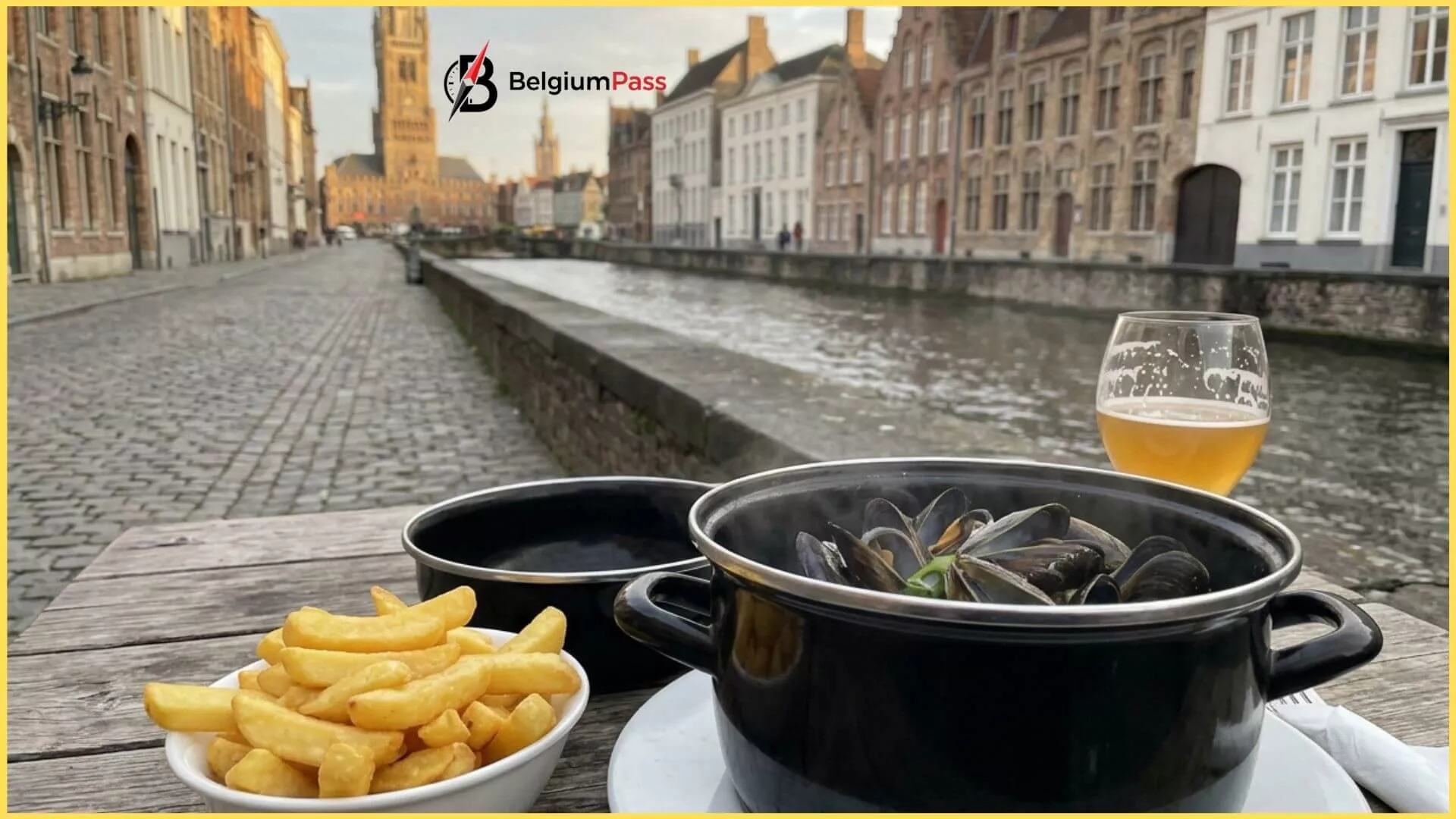
Moules-frites (mussels with fries) is often called Belgium’s national dish, and you’ll see it on menus everywhere from casual brasseries to more formal restaurants. It’s one of those plates every guidebook tells you to try—and for once, the guidebooks are right.
What Exactly Is Moules-Frites?
It’s simple but satisfying: a big pot or bowl of steamed mussels plus a generous side of fries. You eat the mussels, dunk your fries in the broth, and wonder why you don’t eat this at home all the time.
Classic Cooking Styles
Traditionally, the mussels are steamed with:
Butter
Garlic
Shallots
White wine
Parsley
You’ll also find creamier versions and some made with beer or extra herbs and spices, depending on the restaurant. The broth at the bottom is half the fun, so don’t leave it behind.
When to Eat Mussels in Belgium
Moules-frites is especially popular in the cooler months when mussels are at their best, but many restaurants serve it year-round. Coastal areas and big cities like Brussels and Bruges are great places to order it if you want it fresh.
4. Belgian Chocolate – The Souvenir Everyone Wants
Belgian chocolate is famous for a reason—this isn’t just hype for tourists. The country has a long chocolate-making tradition and is especially known for pralines and beautifully made chocolate boxes that somehow vanish faster than you planned.
What Makes Belgian Chocolate Special?
Travel and food writers love to mention the same things:
Careful cocoa processing
Skilled chocolatiers who actually know what they’re doing
Long-standing handmade traditions
Frequent use of pure cocoa butter in high-quality chocolate
All of this adds up to a reputation that makes Belgian chocolate an easy “yes” for gifts—or for yourself.
Famous Brands vs Local Shops
You’ll definitely see big, well-known chocolate names in major cities. But honestly, some of the best experiences come from walking into a smaller, independent chocolatier and asking for their recommendations. Brussels, Bruges, Antwerp, and Ghent are full of these little shops.
Best Chocolate Souvenirs
If you’re trying to decide what to bring home, you can’t go wrong with:
Pralines
Mixed gift boxes
Truffles
Artisan chocolate bars
They’re easy to pack, they scream “Belgium,” and they make excellent peace offerings for people you didn’t invite on the trip.
5. Stoofvlees – Slow-Cooked Belgian Beef Stew
Stoofvlees (also called carbonade flamande or Flemish beef stew) is one of Belgium’s most comforting dishes. It shows up on just about every list of traditional foods and is very often served with—you guessed it—fries.
What Goes Into Stoofvlees?
This is proper slow food:
Beef
Onions
Herbs and seasonings
Belgian beer as a key ingredient
The meat is cooked slowly until it’s tender, and the sauce is rich, deep, and full of flavor, with the beer giving it that distinct Belgian twist.
How People Usually Eat It
You’ll mostly find stoofvlees in brasseries and traditional restaurants as a filling main dish. It’s especially popular when the weather gets cooler and is often served with fries and a local beer—a classic Belgian combo that’s hard to beat.
6. Speculoos – The Spiced Cookie You’ll Keep Craving
Speculoos is one of those biscuits you try once and then suddenly start seeing everywhere. It’s closely linked with Belgian coffee culture and bakery traditions and is especially loved for its warm spice flavor and crunchy texture.
Flavor and Texture
Speculoos usually features:
Cinnamon
Nutmeg
Cardamom
Cloves
Ginger
The biscuits are crunchy, slightly caramelized, and perfect if you like a bit of spice without it being overwhelming.
How People Eat Speculoos
Traditionally, people enjoy speculoos alongside a coffee, and many cafés will serve it on the side of your cup. You’ll also see it in modern versions:
As a spread
In desserts
Crumbled over ice cream
For travelers, speculoos makes an easy snack and a very convenient (and popular) edible souvenir.
7. Belgian Beer and Cheese – A Match Made in Belgium
Belgium is ridiculously famous for its beer, and trying local beer-and-cheese pairings is a big part of the food experience. Beer here isn’t just something you drink with your meal—it’s deeply connected to history, culture, and regional pride.
A Quick Look at Beer Culture
You’ll find an impressive range of Belgian beers:
Abbey-inspired styles
Strong ales
Regional specialties
Every café, pub, and restaurant seems to have its own little lineup of local favorites, often served in their own special glasses.
Cheese Pairings to Try
The fun part is matching the cheese to the beer. In general:
Rich, strong cheeses go well with bolder, more powerful beers
Milder, softer cheeses are better with lighter, more refreshing styles
You don’t need to overthink it—many bars and restaurants will suggest pairings, so feel free to ask.
Best Places in Belgium to Try These Foods
Brussels
Brussels is ideal if you want a bit of everything: waffles, fries, moules-frites, chocolate, and classic brasserie dishes all in one place. It’s often described as a crossroads between refined and hearty Belgian cooking, and that’s exactly what it feels like.
Bruges
Bruges is your postcard-perfect option: cobbled streets, canals, chocolate shops, and cozy restaurants serving mussels and Flemish stew. It’s compact and walkable, which makes it perfect for a food-focused city break.
Antwerp
Antwerp leans a bit more stylish and modern while still serving traditional Belgian food in cafés, bars, and restaurants. It’s a great stop if you want classic dishes but also enjoy trendy spots and a buzzy city vibe.
Ghent
Ghent is known for regional dishes like waterzooi and has a strong reputation for traditional Flemish food. It also has a lively café culture, making it a great place for sweets, beer, and relaxed, casual meals.
Travel Tips for Food Lovers in Belgium
The “best” time to visit depends on what you’re after.
Cooler months are great for hearty dishes like stoofvlees and moules-frites.
Spring and summer are perfect for wandering around cities, grabbing street waffles and fries, and eating outside.
Because food in Belgium is quite seasonal and regional, you’ll find different specialties at different times of year, which keeps things interesting.
In terms of etiquette, Belgium is fairly relaxed. Casual dining is normal, but it always helps to be polite, patient, and open to trying regional specialties instead of just ordering the same thing every time.
If you’re watching your budget, a smart strategy is to mix:
Street food like waffles and fries for quick, cheap bites
Brasserie or restaurant meals for classic dishes like moules-frites, stoofvlees, and beer pairings
That way, you still get the full Belgian food experience without blowing your budget in the tourist center every night.
Belgium’s “greatest hits” list is strong: waffles, fries, moules-frites, chocolate, stoofvlees, speculoos, and all those beer-and-cheese pairings. Each one shows off a different side of the country’s food culture, from quick street snacks to slow-cooked comfort dishes.
If you’re a food-focused traveler, Belgium is absolutely worth more than a quick stopover. Between street stalls, old brasseries, chocolate boutiques, and local bars, this is the kind of place where exploring by taste is half the fun.
FAQ
What food is Belgium most famous for?
Belgium is best known for waffles, fries, chocolate, moules-frites, and beer. These are the foods you’ll see over and over in travel guides and on menus—and they really do live up to the hype.
Are Belgian waffles different from regular waffles?
Yes. Belgian waffles are usually associated with Brussels waffles (light, rectangular, deep pockets) and Liège waffles (denser, sweeter, more caramelized). Their texture and the way they’re served make them stand out from the standard waffles you’ll find elsewhere.
What is the national dish of Belgium?
Moules-frites—mussels served with fries—is widely described as Belgium’s national dish and is a staple in many brasseries and seafood restaurants.
Is Belgian chocolate worth buying?
Definitely, Belgian chocolate has a strong reputation for craftsmanship, quality ingredients, and long chocolate-making traditions. Pralines, truffles, and artisan gift boxes are especially popular with travelers and make great souvenirs.
What drinks pair well with Belgian food?
Belgian beer is the go-to choice and pairs wonderfully with fries, mussels, stews, and cheese. Because there are so many different beer styles, it’s easy to find something that works with whatever you’re eating.