Visit Belgium from the Netherlands by Train: Full Guide
Belgium is close enough to the Netherlands that crossing the border can feel almost effortless. There is no airport to deal with, no long check-in process, and no hours spent waiting around. Instead, you simply board a train at a Dutch station and, before long, step off in the heart of a Belgian city.
If you want to visit Belgium from the Netherlands by train, it is one of the easiest international journeys in Europe. The trip is simple, comfortable, and surprisingly quick, making it ideal for a weekend escape or even a spontaneous day trip. In this guide, you will find everything you need to plan the journey, from the main routes and travel times to ticket prices and the Belgian cities that are worth adding to your itinerary.
Sometimes, the best international trips are the ones that barely feel like leaving home. You board the train, watch the Dutch landscape slip past the window, and before long, Belgium is waiting on the other side.
Why Visit Belgium from the Netherlands by Train?
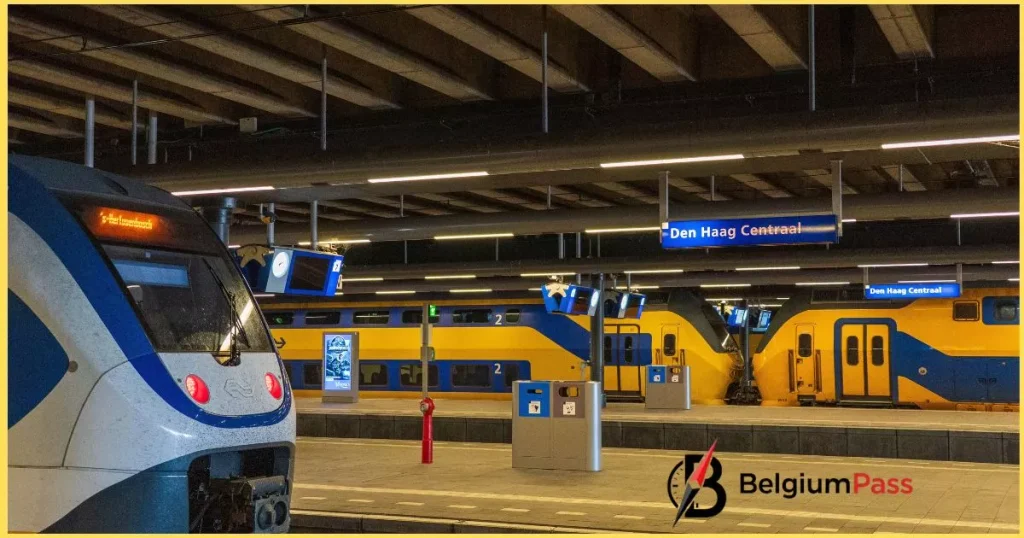
The border between the Netherlands and Belgium hardly feels like a border at all when you are sitting on a train. There are no airport security queues, no need to arrive hours before departure, and no long transfer from an airport outside the city. You board at a Dutch railway station and arrive close to the center of a Belgian city, ready to begin exploring.
The journey itself is part of the experience. High-speed trains connect Amsterdam with Brussels, carrying you quickly through the changing landscape. Outside the window, Dutch polders gradually give way to Belgian countryside, while you can sit back, catch up on work, read a book, or simply watch the scenery pass.
Driving is certainly possible, especially if you want to explore smaller towns and places away from the main railway lines. But for city trips, the train often makes more sense. Traffic, parking costs, and busy city-center roads can turn a simple drive into a tiring part of the journey. By train, you can step straight into the rhythm of the city and start your Belgian adventure almost as soon as you arrive.
Best Belgian Cities to Visit by Train from the Netherlands
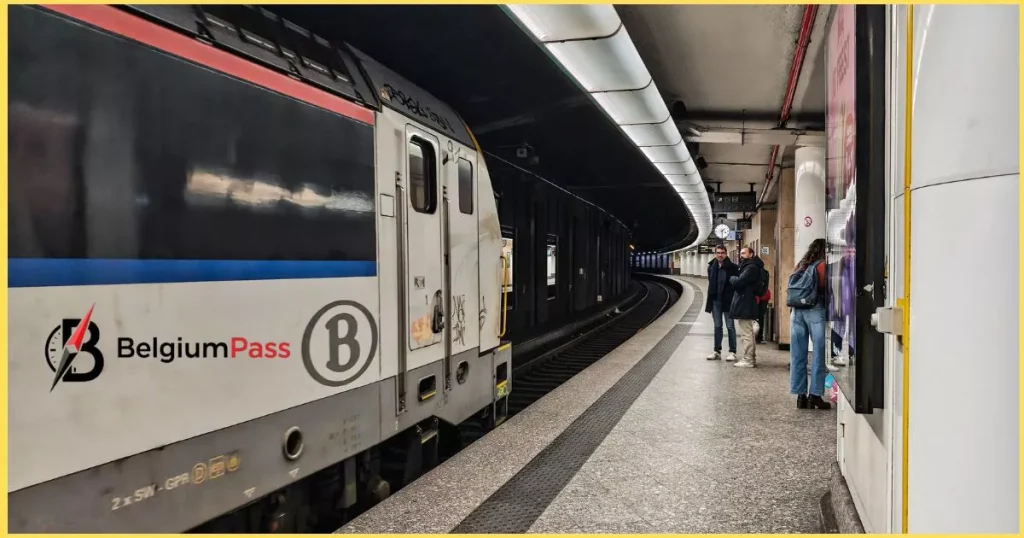
Brussels
Brussels is the obvious first choice for many visitors traveling from the Netherlands to Belgium. The city is easy to reach by train, and its historic center gives you plenty to see within a relatively small area.
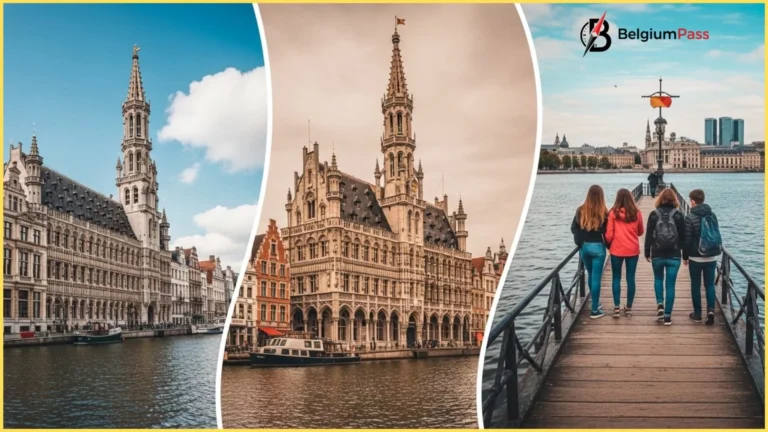
Start at the Grand Place, one of the most impressive squares in Belgium, then wander through the surrounding streets filled with chocolate shops, cafés, museums, and traditional Belgian restaurants. You can also visit some of the city’s famous landmarks before settling down for a relaxed lunch.
One day is enough to see the main sights and get a feel for Brussels. If you have two days, however, you can slow down and enjoy the city without rushing from one landmark to another. For a first trip to Belgium from the Netherlands, Brussels is a simple place to start.
Antwerp
Antwerp feels different from Brussels almost immediately. It has a more modern and creative atmosphere, with a strong connection to fashion, design, art, and architecture.
Antwerp Central Station is one of the highlights before you have even reached the historic center. From there, you can walk toward the old town, explore the main shopping streets, see the cathedral, and spend some time along the Scheldt River.
Antwerp works especially well as a day trip from the Netherlands. The journey from Rotterdam is particularly convenient, so you can leave in the morning, spend most of the day exploring, and return in the evening without spending too much of the day on the train.
If you want a Belgian city that combines history with a younger and more contemporary atmosphere, Antwerp is an interesting choice.
Bruges
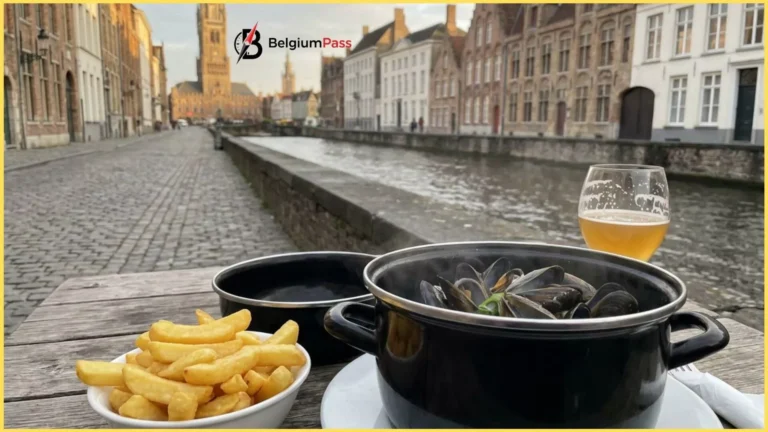
Bruges is the Belgium many people imagine before they ever arrive. Medieval streets, quiet canals, old stone buildings, and beautiful squares give the city a storybook atmosphere that is difficult to ignore.
The historic center is compact enough to explore on foot, with the Markt, Belfry, canals, and narrow streets providing plenty to see during a first visit. It is also a lovely city for simply walking without following a strict sightseeing plan.
Bruges can be visited as a day trip from the Netherlands, although the journey usually takes longer than traveling to Brussels or Antwerp. You may also need an additional connection depending on where you start in the Netherlands.
For that reason, an early train is a good idea if you want to make the most of your day. If you have more time, staying overnight allows you to experience Bruges after many of the daytime visitors have left.
Ghent
Ghent sits somewhere between Bruges and Brussels in character. It has the medieval beauty of Bruges, but it also has a lively atmosphere shaped by its large student population and active local life.
The historic center is full of places worth exploring, including the medieval castle, canals, old streets, and riverside buildings. You can spend most of a day walking between the main sights, stopping for Belgian food or a coffee whenever you feel like taking a break.
One of the things that makes Ghent interesting is the balance between history and everyday life. Compared with Bruges, it can feel less like a preserved tourist attraction and more like a living Belgian city.
If you want historic architecture without spending your entire day surrounded by the busiest tourist areas, Ghent is well worth considering.
Other Belgian Destinations
Belgium has plenty of interesting places beyond Brussels, Antwerp, Bruges, and Ghent.
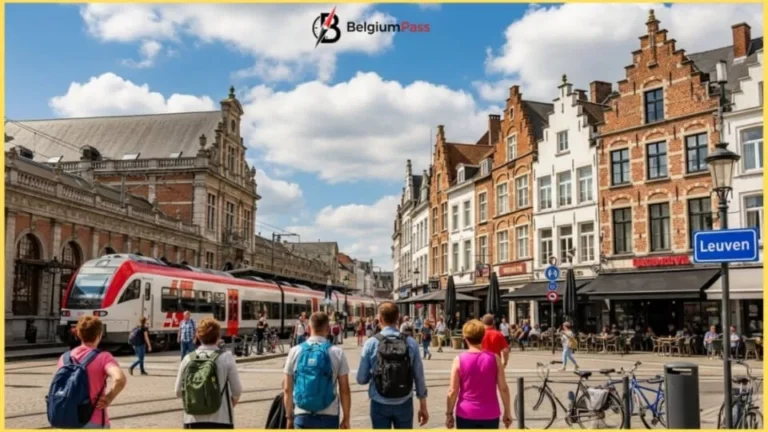
Leuven is a compact university city known for its beautiful historic center and impressive town hall. It is easy to combine with a trip to Brussels if you want to add another Belgian city without making your itinerary too complicated.
Mechelen is another good option. Located between Brussels and Antwerp, it offers historic streets, churches, squares, and a quieter atmosphere than Belgium’s biggest tourist destinations. It can work particularly well if you prefer smaller cities and a slower pace.
Liège gives you a different view of Belgium, especially if you want to travel farther east. Its character is distinct from the classic medieval cities of Bruges and Ghent, making it an interesting choice for a longer trip.
If you would rather finish your Belgian adventure beside the sea, consider Ostend. Belgium’s coastal city offers beaches, a promenade, and a completely different atmosphere from the country’s historic inland cities.
Which Belgian City Should You Visit from the Netherlands?
The best city depends largely on the kind of day you want to have.
Choose Brussels if you want famous landmarks, history, museums, chocolate, and a traditional first taste of Belgium. Choose Antwerp if you prefer architecture, fashion, shopping, and a more modern city atmosphere.
Bruges is the natural choice for canals, medieval streets, and a slower romantic feel, while Ghent offers historic beauty with more of an everyday city atmosphere.
For something quieter, Leuven or Mechelen can make excellent alternatives. And if you have more time to travel beyond the main routes, Liège and Ostend show you another side of Belgium.
The good thing about traveling from the Netherlands is that you do not have to make the decision feel permanent. Belgium is close, and the train makes it easy to come back. One weekend might take you to Brussels, another could lead you through the canals of Bruges, and a future trip could bring you to Antwerp or Ghent.
That is part of the charm of visiting Belgium from the Netherlands by train. The border is close, the journey is simple, and several very different Belgian cities are waiting just a short train ride away.
Main Train Routes from the Netherlands to Belgium
Amsterdam to Brussels by Train
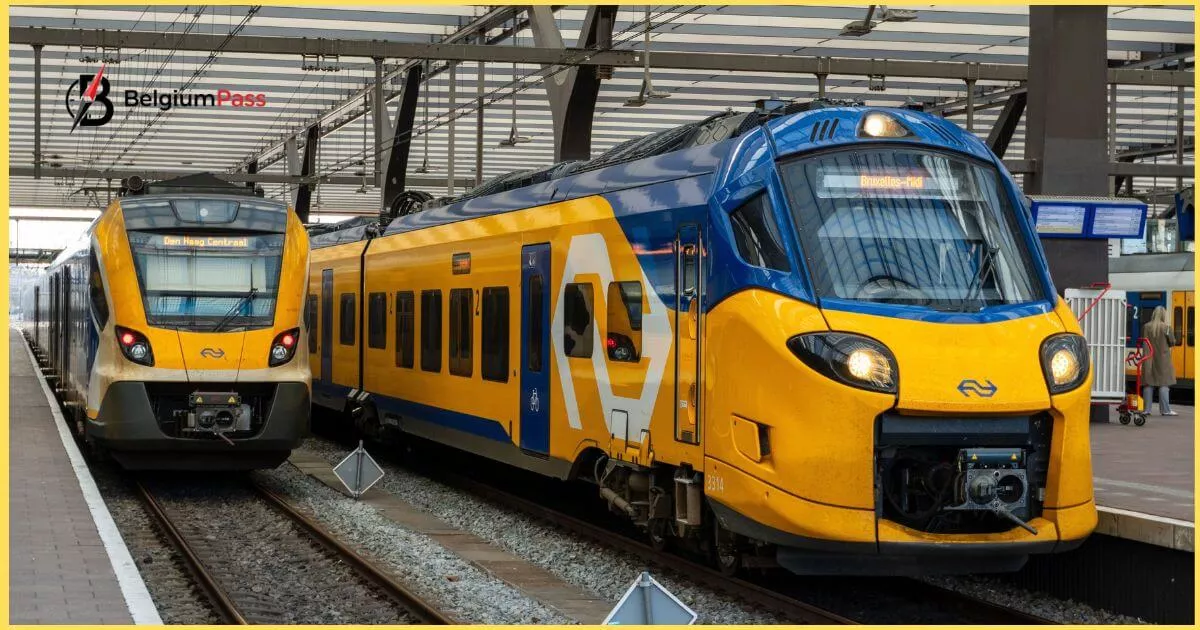
The main rail connection between the two capitals is the high-speed Eurostar service, with the fastest direct journeys taking around one hour and fifty minutes. It is a remarkably short trip between two major European cities.
Slower Intercity services are also available and can take close to three hours, usually with at least one change along the way. For many travelers, the direct high-speed train is worth considering because it saves valuable time, especially when visiting Brussels for just one day.
Trains arrive at Brussels Midi, also known as Brussels Zuid, the city’s main international railway station. From there, you can continue into the city center by local transport or on foot, depending on where you are heading.
Rotterdam to Brussels by Train
Rotterdam is an excellent starting point if you are staying in the south of the Netherlands rather than Amsterdam. The shorter distance makes the journey noticeably quicker.
Direct high-speed services can take around one hour and ten minutes, making Rotterdam a convenient base for a day trip to Brussels. You can leave in the morning, spend most of the day exploring the Belgian capital, and return to the Netherlands in the evening.
Amsterdam to Antwerp by Train
Antwerp is closer to the Netherlands than Brussels, and the train journey from Amsterdam is usually a little over an hour on direct high-speed services.
Once you arrive, Antwerp Central Station puts you in a good position to begin exploring. The historic center is easy to reach, and you can quickly move from the impressive station architecture into the older streets of the city.
For travelers looking for a Belgian city that is easy to explore in one day, Antwerp is a particularly convenient option.
Rotterdam to Antwerp by Train
The journey from Rotterdam to Antwerp is one of the shortest international train trips in this part of Europe. Direct high-speed services can take around half an hour, making it possible to cross the border almost before you have settled into your seat.
This is a great option if you want to spend a full day in Belgium without giving up hours to travel. Antwerp’s historic center, shopping streets, architecture, and riverside areas give you plenty to explore before catching the train back to Rotterdam.
Utrecht to Belgium by Train
Traveling from Utrecht usually involves connecting through Amsterdam or Rotterdam before continuing into Belgium. Because of the additional connection, the journey takes longer than it does from either of those cities.
Utrecht is still a practical starting point, especially if you are already staying there. Just allow some extra time in your itinerary and check the connection carefully before you leave.
How Long Does the Train from the Netherlands to Belgium Take?
There is no single journey time because it depends on where you start, where you are going, and which train service you choose.
Direct high-speed trains are generally much quicker than slower services that require a connection. On some routes, the difference can be more than an hour, which becomes especially important when you are planning a day trip.
As a simple guide, Rotterdam to Antwerp can take around half an hour, Rotterdam to Brussels around one hour and ten minutes, Amsterdam to Antwerp a little over an hour, and Amsterdam to Brussels around one hour and fifty minutes on the fastest direct services.
The distances may be short, but the experience feels wonderfully simple. You leave a Dutch city behind, watch the landscape change outside the window, and before long you are stepping onto a Belgian platform with an entirely different city waiting beyond the station.
| Route | Approximate Journey Time |
|---|---|
| Amsterdam to Brussels | Around 1 hour 50 minutes (direct) |
| Rotterdam to Brussels | Around 1 hour 10 minutes |
| Amsterdam to Antwerp | Around 1 hour 15 minutes |
| Rotterdam to Antwerp | Around 30 to 35 minutes |
These figures are based on current timetables, but train schedules and journey times can change. It is always worth checking the exact departure you plan to book rather than relying on a fixed travel time.
How to Buy Train Tickets
Buying your ticket online through the train operator’s official website is usually the simplest option. It can also be the cheapest, especially if you book well ahead of your travel date. Prices on high-speed services can rise as the departure gets closer, so leaving it until the last minute may mean paying considerably more.
You can also buy tickets at the station, either from a ticket machine or at a counter. This is useful if your plans are flexible, but it does not always give you the best fare.
For this route, booking early is worth considering. High-speed tickets are generally sold at different price levels, so the earlier you book, the better your chances of finding a lower fare.
Most tickets are now digital, which makes the journey even simpler. You normally do not need to print anything. Keep your ticket loaded on your phone and have your passport or ID card within easy reach in case you need to show it during the journey.
How Much Does It Cost to Travel from the Netherlands to Belgium by Train?
The price can vary considerably depending on when you book, which route you take, and which train service you choose.
Early high-speed fares can sometimes start at around €25 to €30 one way, while last-minute tickets on the same route can become much more expensive and may rise above €80.
Traveling outside peak hours can help keep the cost down. Weekday journeys can also be cheaper than busy weekend departures or trains during the morning and evening commuting periods.
It is worth checking both return tickets and two separate one-way tickets before booking. A return journey does not always offer a significant saving, so comparing the two options can sometimes make a difference.
If keeping costs low is more important than arriving quickly, slower Intercity services can be a useful alternative on routes where they are available. They may take longer and require a connection, but the lower fare can make the extra travel time worthwhile.
Do You Need a Passport or ID to Travel from the Netherlands to Belgium?
The Netherlands and Belgium are both part of the Schengen Area, so there is normally no routine passport control when crossing the border between the two countries.
Even so, you should carry a valid passport or national ID card with you when traveling. Occasional checks can take place on international routes, and having your documents easily available makes things much simpler if you are asked to show them.
If you are traveling from outside the EU, remember that Schengen membership does not automatically determine whether you need a visa. Check the entry requirements that apply to your nationality before booking your trip.
What Is the Best Time to Take the Train?
If you are planning a full day trip to Belgium, an early morning train is usually the most practical choice. You arrive with most of the day still ahead of you, giving you plenty of time to explore before catching the evening train home.
Midday departures are better suited to a slower trip. They work well if you are staying overnight or simply want a relaxed afternoon and evening rather than trying to fit an entire city into one day.
Evening trains can also make sense if you are heading to Belgium for a short overnight stay. Instead of spending your first day traveling early, you can arrive later, check in, have dinner, and begin exploring the following morning.
Weekdays are often a little calmer than weekends, particularly outside the busiest travel periods. If your trip falls around a Belgian or Dutch public holiday, it is worth booking further ahead because demand can increase and popular trains may fill more quickly.
In the end, there is no single perfect departure time. Choose an early train if you want a full day of sightseeing, a later one if you prefer a slower pace, and always check the timetable before you leave. A little planning at the beginning leaves more room for the enjoyable part of the journey once you cross the border.
A Simple Day Trip to Belgium from the Netherlands
Morning: Leave the Netherlands
Pick an early departure to maximize your time in Belgium. Bring water, a snack, and anything you need for the journey, since onboard food options are limited on shorter routes.
Late Morning: Arrive in Belgium
Once you’re at the station, most Belgian city centers are an easy walk or short tram ride away. Use the first hour to get oriented before diving into the main sights.
Afternoon: Explore and Eat
Spend the early afternoon walking through the historic center, then break for a proper Belgian lunch, whether that’s a classic plate of frites, a waffle, or something more substantial. Use the rest of the afternoon for museums, shopping, or simply wandering the main landmarks.
Evening: Return to the Netherlands
Pick your return train with a bit of buffer built in, rather than cutting it close. Trains do occasionally run late, and you don’t want to be sprinting for the last connection home.
What to Expect at Belgian Train Stations
Belgian train stations can be part of the experience themselves, especially when you arrive in a city for the first time.
Brussels Midi, also known as Brussels Zuid, is the main international arrival point and one of the busier stations on this journey. If you need to change trains or continue somewhere else, give yourself a few extra minutes to find your way around.
Antwerp Central is a different story. The station is famous for its impressive architecture, so take a moment to look up before rushing into the city. It is one of those places where the station itself feels like the beginning of the trip.
Bruges station is smaller and easier to navigate, with the historic center within walking distance. Ghent Sint Pieters is a little farther from the old town, so if you are short on time, allow for a short tram ride into the center.
Major Belgian stations generally have clear departure boards and basic facilities, including cafés, toilets, and luggage storage options. Still, larger stations can feel busy at peak times, so arriving with a little extra time makes the whole experience more relaxed.
Tips for a Smooth Netherlands-to-Belgium Train Journey
A little preparation can make a cross-border train journey feel almost effortless.
Check your train status before leaving home, particularly if you are traveling during a period when engineering works or strikes could affect services. Train schedules can occasionally change on either side of the border, so it is worth checking before you set off.
Arrive at the station with enough time to find your platform, especially if you are traveling through a large station such as Brussels Midi or Amsterdam Centraal. Keep your ticket and ID somewhere easy to reach rather than buried at the bottom of your luggage.
If you are taking a day trip, pack light. Carrying a small bag is much easier when you are walking through city streets, climbing station stairs, or jumping on a tram after arriving in Belgium.
It is also useful to have a reliable travel app for checking live departures and possible delays. Before you start exploring, take a quick look at your return train as well. Knowing when and where you need to be later in the day means you can enjoy the city without constantly checking the clock.
And perhaps the simplest tip is to leave some space in your plans. The best moments of a short trip are not always the ones you schedule. Sometimes it is a quiet street, a small café, or an unexpected view that becomes the memory you take home.
Train vs. Car: Which Is Better for Belgium?
For a city-focused trip, the train will usually make life easier. Once you add traffic, parking, and the time needed to get into the city center, the advantage of the railway becomes clear.
Routes such as Rotterdam to Antwerp or Rotterdam to Brussels are particularly convenient by train, allowing you to travel quickly without worrying about finding a parking space when you arrive.
Parking in Belgian city centers can also be expensive and difficult to find. The train removes that problem completely, dropping you close to the places you actually want to visit.
Cost is a little less straightforward. If you book your train early, the price can be very attractive, but traveling by car may work out cheaper when several people are sharing the journey. It depends on the route, the number of travelers, and how far ahead you plan.
For a day trip focused on one or two cities, the train offers a simple combination of speed, convenience, and central arrival. You can step off the train and start exploring instead of looking for somewhere to leave the car.
A car becomes more useful when your plans move beyond the major cities. If you want to visit several small towns, explore rural areas, or change your route whenever you feel like it, having your own vehicle gives you a freedom that trains cannot always provide.
In the end, the choice comes down to the kind of journey you want. For a straightforward city escape, the train keeps things easy. For a slower road trip through smaller Belgian towns and countryside, a car gives you more freedom to follow the road wherever it leads.
Can You Visit Belgium from the Netherlands in One Day?
Yes, absolutely. For cities such as Brussels and Antwerp, a day trip can work surprisingly well because the journey is so short. Bruges and Ghent are also possible in a single day, although the extra travel time means you will want to plan your day a little more carefully.
Realistically, a day trip is best when you focus on one historic center, enjoy a proper Belgian meal, and leave enough time to see a few of the city’s main sights without constantly watching the clock. Trying to see everything in one day can quickly turn a pleasant trip into a race.
If you prefer slower mornings, longer lunches, or the idea of visiting two cities during the same trip, staying overnight is the better choice. One extra night can give you the freedom to enjoy Belgium at a much gentler pace.
Suggested Day-Trip Combinations
Brussels gives you the most room for a full day of sightseeing, with plenty to explore around its historic center. Antwerp is a good choice for a shorter and more relaxed day, combining architecture, shopping, food, and riverside walks.
If you want a little variety, you could combine Brussels with a short visit to Leuven or Mechelen. This gives you a taste of another Belgian city without trying to pack too much into the same day.
Sample Netherlands-to-Belgium Train Itineraries
One Day in Brussels
Arrive in Brussels by mid-morning and make your way toward the Grand Place, one of the city’s most beautiful starting points. Spend the late morning wandering through the surrounding historic streets, stopping whenever something catches your eye.
Set aside time for a proper Belgian lunch, then use the afternoon for a museum, another part of the historic center, or simply more time on foot. As evening approaches, make your way back to the station and catch your train home.
It is a simple day, but it gives you enough time to experience the character of Brussels without trying to conquer the whole city.
One Day in Antwerp
Begin your visit at Antwerp Central Station, which is impressive enough to deserve a few minutes of your time before you even leave the building.
From there, walk toward the historic center and spend the morning exploring its streets and landmarks. Later, head along Meir, Antwerp’s main shopping street, before stopping for lunch.
Keep the afternoon relaxed with a walk toward the river and some time around the city center. Then return to the station for your evening train back to the Netherlands.
One Day in Bruges
For Bruges, an early train is a good idea because the journey takes a little longer and there is plenty to see once you arrive.
Start with a walk along the canals before making your way toward Markt square and the heart of the old city. Around lunchtime, take a break for a Belgian meal rather than trying to rush from one attraction to the next.
Spend the early afternoon around the Belfry and the surrounding medieval streets, then leave yourself a comfortable buffer before your return train. Bruges is at its best when you allow yourself time to simply wander.
Common Questions About Traveling to Belgium by Train
Is Belgium easy to reach from the Netherlands by train?
Yes. Direct high-speed services connect major Dutch and Belgian cities, making the journey one of the simplest international rail trips in Europe.
What is the fastest train from the Netherlands to Belgium?
High-speed Eurostar services are among the fastest options for journeys between the Netherlands and Belgium, particularly on the main international routes.
Can I take a direct train from Amsterdam to Brussels?
Yes. Direct high-speed services connect Amsterdam and Brussels, with the journey taking around one hour and fifty minutes.
How much is a train ticket from the Netherlands to Belgium?
Prices vary depending on the route, train, and how far ahead you book. Early fares can start at around €25 to €30, while last-minute tickets can be considerably more expensive.
Can I visit Brussels as a day trip from Amsterdam?
Yes. Brussels is a practical day trip from Amsterdam thanks to the direct high-speed connection between the two cities.
Is Antwerp closer to the Netherlands than Brussels?
Yes. Antwerp is geographically closer to the Dutch border than Brussels, which is particularly noticeable when traveling from Rotterdam and other southern parts of the Netherlands.
Do I need a passport to travel from the Netherlands to Belgium?
Both countries are part of the Schengen Area, so there is normally no routine border control between them. However, you should still carry a valid passport or national ID card while traveling.
Can I use my Dutch train card in Belgium?
Generally, no. Dutch and Belgian domestic travel systems are separate, so you will normally need a suitable ticket for your cross-border journey.
Should I book my Belgium train ticket in advance?
Yes, especially if you are traveling on a high-speed service. Booking earlier can give you access to lower fares, while prices may increase closer to the travel date.
Is the train better than flying from the Netherlands to Belgium?
For many travelers, the train is the more convenient option for this short journey. Once you factor in airport transfers, check-in time, security, and the distance between airports and city centers, the train can be much simpler. You can leave one city center and arrive in another without the usual airport routine.
Belgium is close enough to the Netherlands that the journey can feel almost like crossing from one neighborhood to another. You step onto a platform in one country and, not long afterward, step into the heart of another.
The best city depends on the kind of day you want. Choose Brussels for grand squares, history, and Belgian food. Pick Antwerp for architecture, shopping, and a livelier city atmosphere. Go to Bruges for canals, medieval streets, and a slower romantic mood. Or choose Ghent if you want historic beauty with a little more everyday energy.
Whichever city you choose, traveling by train makes Belgium remarkably easy to explore from the Netherlands. No airport queues, no long transfers, and no complicated journey. Just a train, a short ride across the border, and another Belgian city waiting at the end of the tracks.